
-
Address: WTC Building,
Wenzhou, Zhejiang 325000 -
Call Us: +(86) 15158565314
chanharm1991@gmail.com
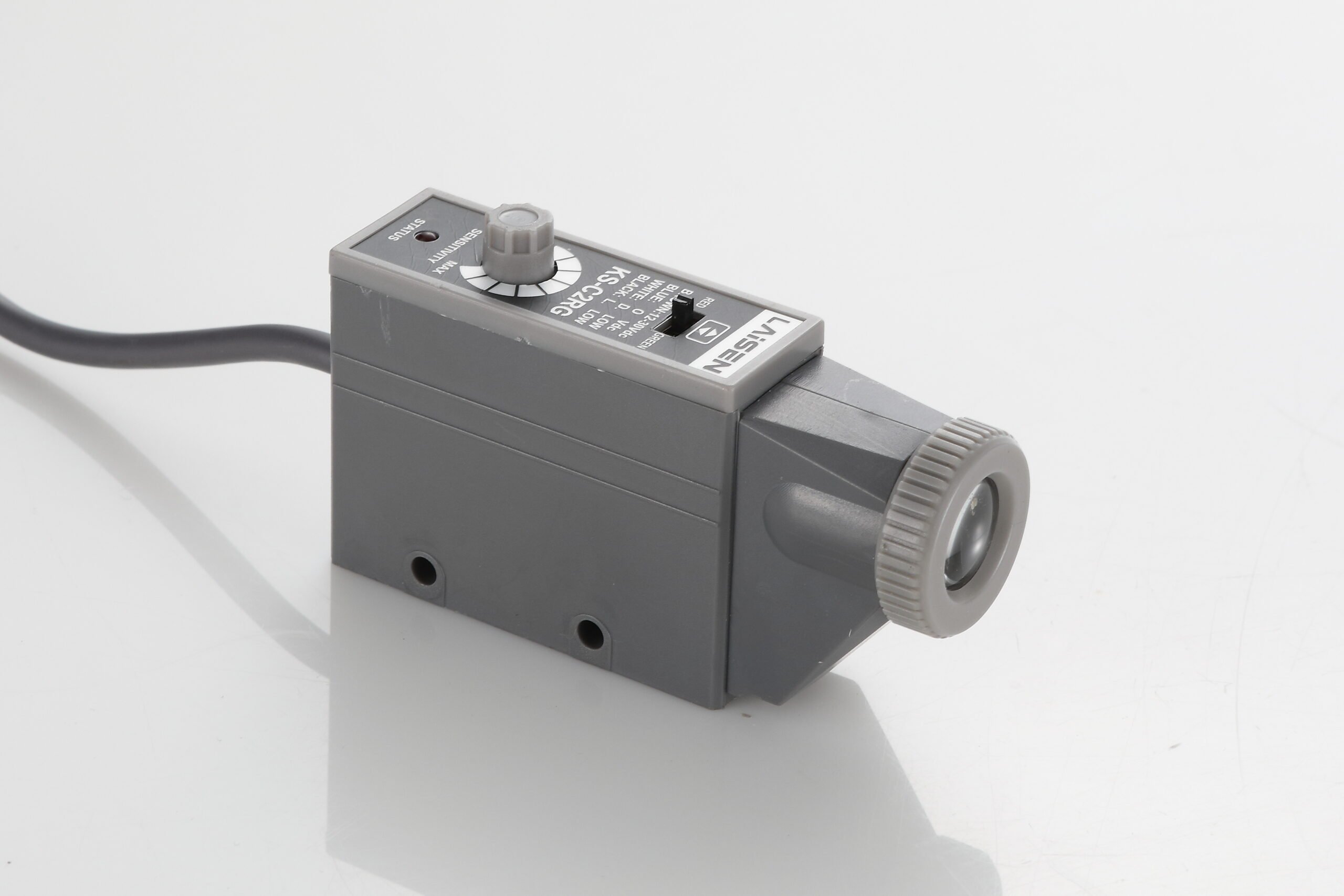
The photoelectric mark sensor (also called a registration mark sensor or “electric eye”) is a key component in packaging machines.
It detects printed registration marks (color marks) on the film to control film indexing, ensuring accurate print-to-cut alignment and consistent bag length.
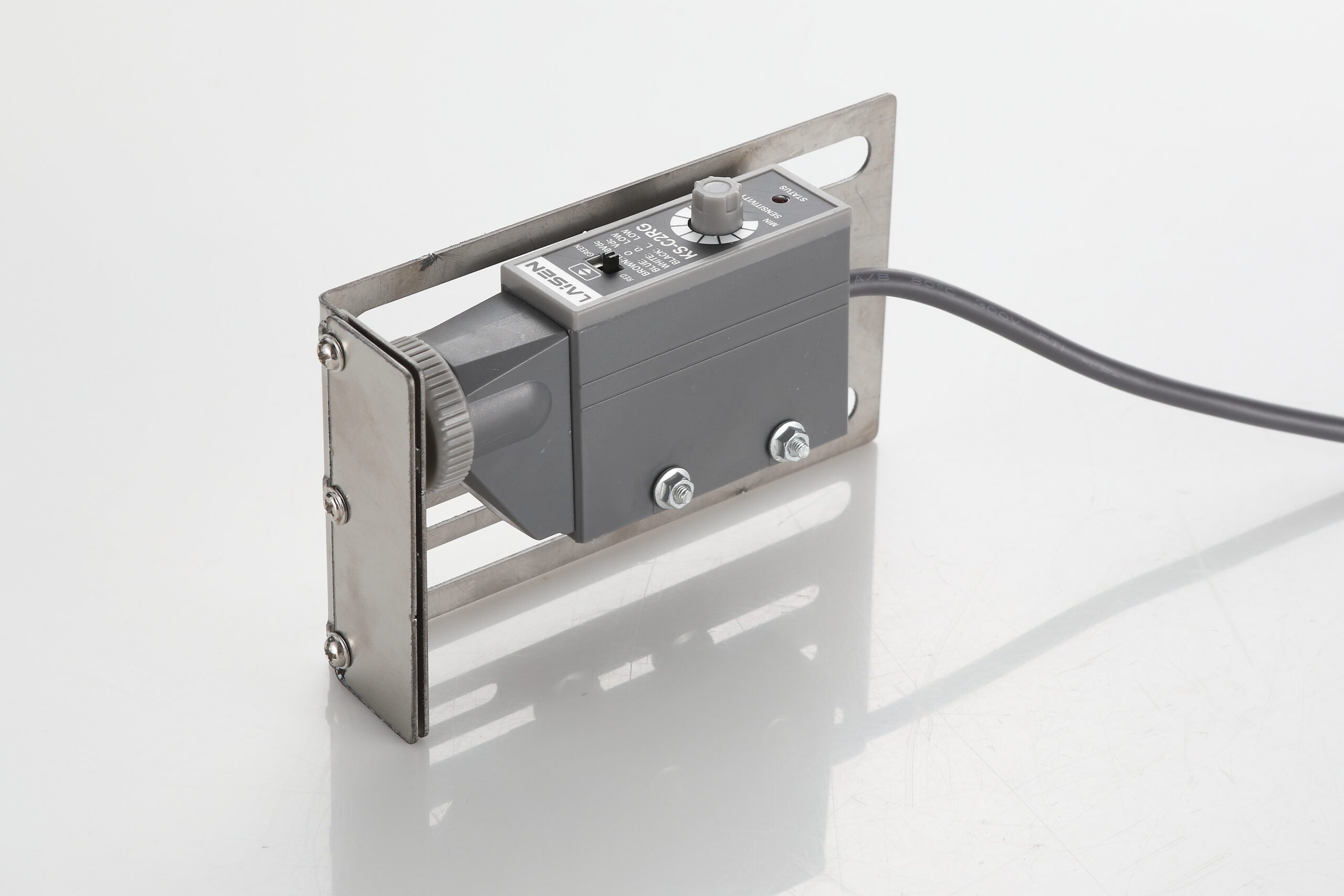
During production, the film may slip, stretch, or drift due to tension, rollers, or material changes. By continuously reading the marks, the sensor helps the machine compensate for these shifts, reducing misregistration (off-center prints or wrong seal/cutoff positions).
Printed film should include registration marks (color marks). The sensor detects each mark and tells the machine when to stop running the film, so the seal and cut happen in the correct position relative to the printed artwork.
Accurate registration ensures consistent bag length, particularly for printed bags with stringent design tolerances.

These sensors come in several versions—most commonly single-color (monochrome), dual-color (two-channel), and three-color (RGB) models.
The key differences are detection capability, film/print compatibility, and resistance to interference (e.g., reflective films or complex backgrounds).
We no longer offer the single-color (monochrome) model.
1. Overview of Key Differences
| Item | Dual-Color Model | Three-Color Model |
|---|---|---|
| Light source | 2 colors (commonly red + green or red + blue) | 3 colors (red + green + blue, RGB) |
| Detection principle | Compares reflectance/contrast in two channels | Compares the reflectance/contrast in two channels |
| Anti-interference ability | Moderate | Strong |
| Registration mark requirement | Usually requires higher contrast marks | More tolerant of low-contrast or complex backgrounds |
| Recommended print/film complexity | Low to medium | Medium to high |
| Cost | Lower | Higher |
| Setup & adjustment | Typically simple setup | May require more tuning |
2. Selection Recommendations (Practical)
The most direct deciding factor is print complexity.
In most cases, the more complex the printed film/artwork, the more we recommend a three-color (RGB) mark sensor. Other factors usually have a much smaller impact.
- Simple, high-contrast registration mark + clean background → Dual-color is usually sufficient
- Busy artwork / multiple colors / gradients / reflective films → Three-color (RGB) recommended
- Frequent artwork changes → Three-color (RGB) helps reduce the risk of sensor mismatch and saves troubleshooting time
If you’re not sure which type you need, send us your film artwork/design (or a photo of the printed roll). We’ll review it and recommend the right sensor model.
-

An incline conveyor is a ...
April 25, 2026
-

The photoelectric mark sensor (also ...
January 08, 2026
-

This video showcases a manual ...
August 05, 2023
-

Automated packaging plays a crucial ...
July 24, 2023
-

The laser-counting filling machine is ...
June 27, 2023
-

Filling Range: 100-9999 gramsFilling Speed: ...
June 15, 2023